
Design the program
Choose devices, supplies, kits, and the patient experience for your care model.
Telehealth, virtual care, and digital health companies use Impilo for devices, white-label kits, patient support, and one API, so your team can focus on the product and the care.
Request Demo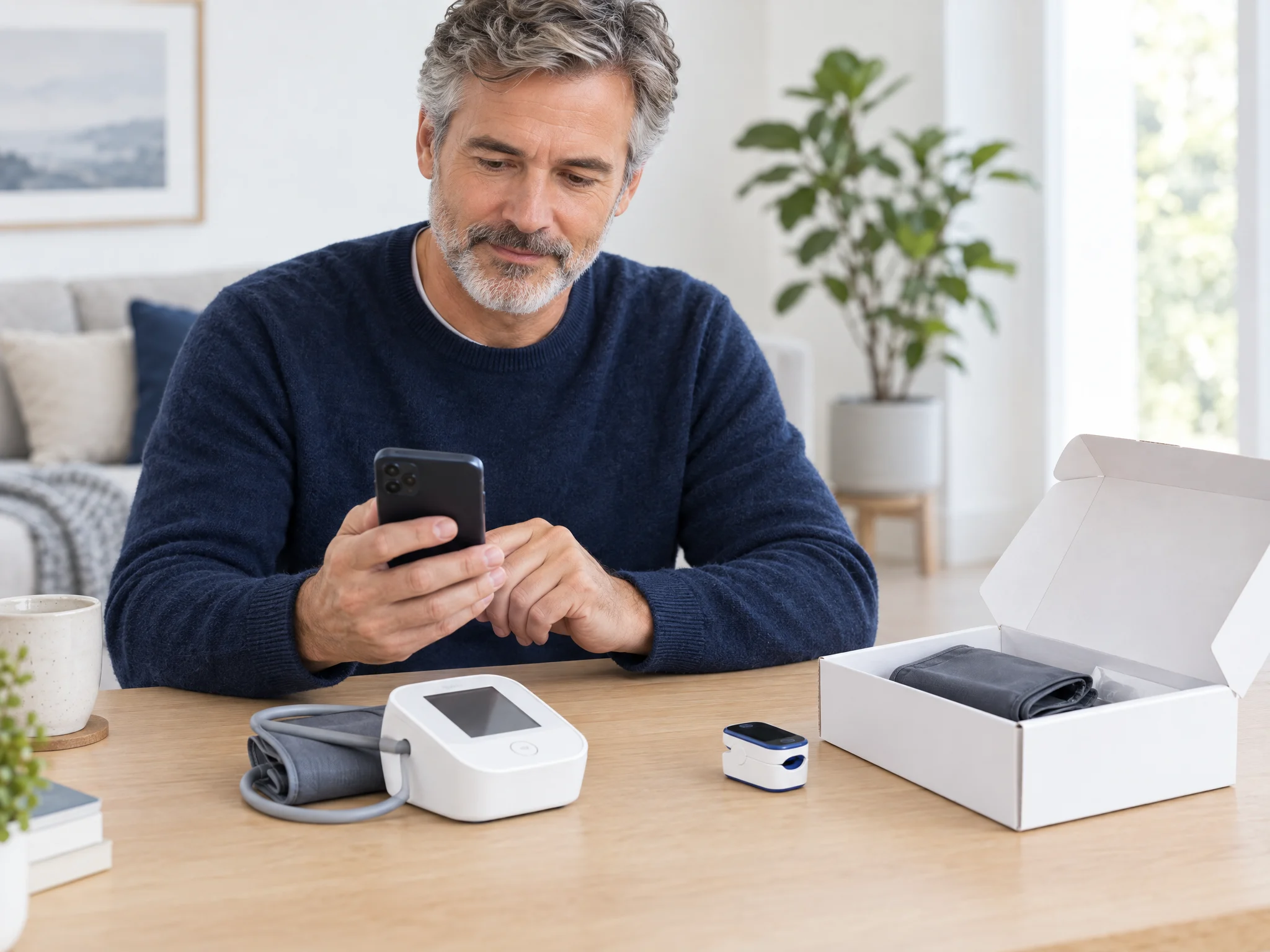
Impilo gives telehealth, virtual care, and digital health companies the physical and digital infrastructure behind connected care: device and supply sourcing, white-label kitting, nationwide direct-to-patient fulfillment, patient onboarding and support, reverse logistics, and APIs and a Device SDK that normalize data across manufacturers. Teams launch remote programs without building hardware operations in-house.
Choose devices, supplies, kits, and the patient experience for your care model.
Integrate through the Impilo API, Device SDK, and webhooks, or use the Impilo dashboard.
Kit and ship branded devices to patients nationwide, with support to get them set up.
Impilo manages replacements, returns, and support while normalized data reaches your team.
Embed device pairing and data capture in your own app and receive normalized readings.
Branded patient kits shipped directly to homes in all 50 states.
Onboarding, troubleshooting, engagement, and replacement coordination.
Cellular and Bluetooth devices, supplies, and kits from one sourcing partner.
Deliver data to athenahealth, Elation, eClinicalWorks, Epic, and more.
An AI operating layer that coordinates care outside the clinic across your systems.
Add remote patient monitoring, chronic and principal care management, APCM, and CMS ACCESS Model workflows to your digital care offering, with devices, engagement, and data in one patient record.
Collect physiologic readings from connected devices at home and act on them between visits.
Track non-physiologic data at home, such as therapy adherence, therapy response, and musculoskeletal or respiratory status.
Ongoing care management between visits for patients living with two or more chronic conditions.
Focused care management for patients with one high-risk chronic condition.
Medicare's monthly advanced primary care bundle, billed with G0556, G0557, or G0558 by patient complexity, which brings together elements of CCM, PCM, and transitional care management.
A 10-year CMS Innovation Center model, starting July 5, 2026, that pays for technology-enabled chronic care based on whether patients' health improves.
CMS sets the eligibility, documentation, and billing requirements for each program. Your clinical team decides which patients enroll and what is billed.
Impilo supports virtual, hybrid, and digital-first care models that reach patients at home.
Telehealth, virtual care, and digital health companies use Impilo for the operations behind connected care: devices and supplies, white-label kitting, direct-to-patient fulfillment, patient support, replacements and returns, and one API for normalized device and patient data. Impilo handles the patient monitoring operations while your team handles the product and the clinical care.
Yes. The Device SDK can be embedded in your own mobile application to capture readings from supported devices, or patients can use the Impilo Patient Mobile App. Data is normalized and delivered to your product, dashboard, or EHR through the Impilo API and webhooks.
Yes. Impilo customizes and white-labels medical device kits and ships them directly to patients, so you do not need in-house logistics.
Impilo's patient support team handles onboarding, device troubleshooting, engagement, and replacement coordination, so your clinicians stay focused on care.
Yes. Digital health teams use Impilo to run remote patient monitoring (RPM), chronic care management (CCM), principal care management (PCM), advanced primary care management (APCM), and technology-enabled care for the CMS ACCESS Model from one patient record. Connected devices, the prioritized Patient Queue, text, email, call, and video communication, questionnaires, automated time tracking, and billing and claims reporting sit in the same system. CMS sets each program's requirements, and your clinical team decides enrollment and billing.