
Continuous Glucose Monitoring Systems (CGMs): A clinician’s perspective on how CGMs improve patient care quality

Continuous Glucose Monitoring Systems (CGMs): A clinician’s perspective on how CGMs improve patient care quality
Hello and welcome! My name is Rachel McGrath, Director of Patient Care and Engagement at Ciba Health. Ciba Health is a digital healthcare company that uses root-cause medicine and cutting-edge technology to prevent and reverse common and costly chronic health conditions. Our mission is to deliver a new standard of care by helping people look “under the hood” of their health, so they can lead fulfilling lives.
As the director of patient care and engagement at Ciba Health, my job is to ensure that the end product, our programs, are meeting the needs of the patient. This can range from ensuring that the patient understands how to access their platforms and lab work to making sure they know how to use their wearable devices. In addition to the patient care side, I’m also in charge of the engagement efforts, ensuring that our programs are running smoothly and seamlessly so patients stay engaged with their program, their care team, and ultimately, meet and sustain their short term and long-term health goals.
To be a leader in this healthcare industry, we rely heavily on our use of digital devices to provide the clinical data, both for the care team as well as for the patient. These devices allow patients to see first-hand how their lifestyle and behaviors affect their overall health. One of the most crucial devices is a continuous glucose monitor (CGM), which allows patients to see the effects of food, drinks, exercise, sleep, and stress on their glucose levels, also known as blood sugar levels. I will be diving deeper into what a CGM is, how it can play a role in diabetes management, preventing and reversing other chronic conditions, and how it can optimize a patient's health. I will also illustrate how this data can provide insights for the clinical care team to help create a personalized care plan to tackle a patient's chronic condition. Lastly, I will discuss how remote patient monitoring (RPM) plays a role in healthcare today.
Understanding CGMs:
A Continuous Glucose Monitor (CGM) as defined by the National Institute of Health (NIH) is a device that automatically estimates your blood glucose level throughout the day and night. You can see what your blood glucose level is at any time. You can also review how your blood glucose level changes over time—from a few hours to a few days— and spot trends.
Seeing your blood glucose levels in real-time can help you make more informed decisions about the food and beverages you consume, the physical activity you participate in, and the medicines you take. Keeping your blood glucose level in your target range can help prevent other health problems caused by diabetes as well as optimize health and lose weight.
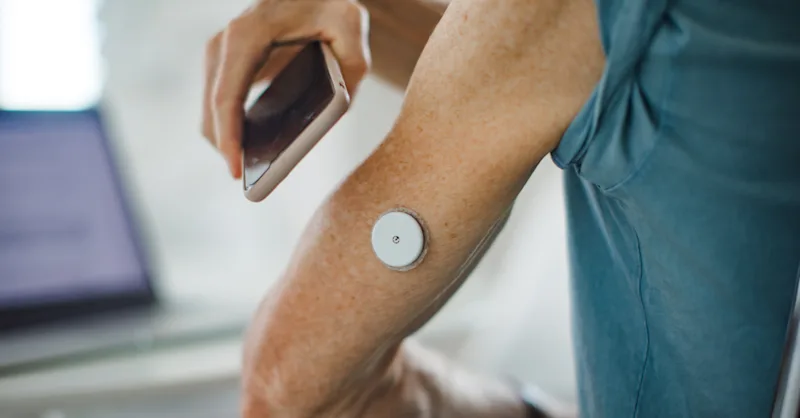
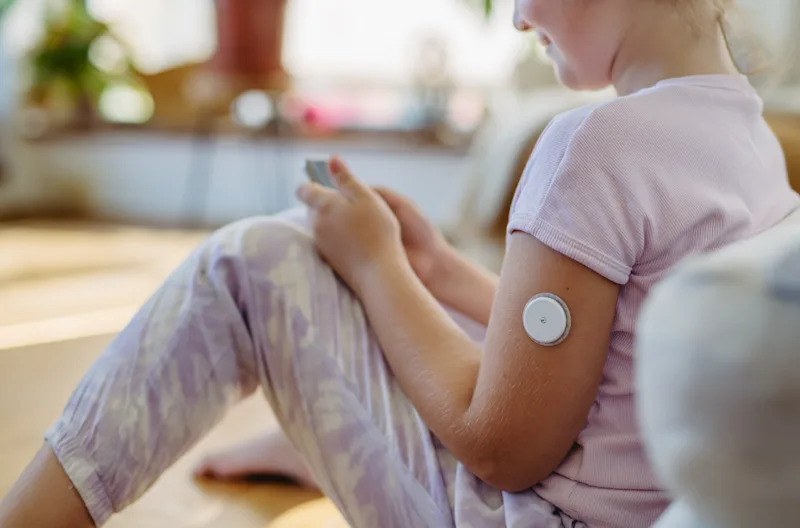
So how does it work? A CGM has a tiny sensor that is placed in a fatty part of the body—usually the stomach or the back of the upper arm—and held in place by a sticky cover. This sensor tracks sugar levels in the interstitial fluid and sends a transmission signal to a smart device, or insulin pump, to provide a reading of your glucose levels. There are different types of CGMs: some are implantable and others must be changed out every 10-14 days. Whichever device you choose works in the same way. One big thing to note with CGM’s is that it detects glucose levels in the interstitial fluid and not directly in the bloodstream. Since glucose leaks into the interstitial fluid last, there is a slight lag time with CGM readings compared to finger prick readings.
Roles of CGMs in Diabetes Management
CGM’s can play an amazing role in diabetes management. Being able to see the effects of diet, exercise, and medicine on your blood glucose levels in real-time can transform the way patients tackle their diabetes. For example, if a person with diabetes is utilizing a CGM, they can see how certain food choices may cause rapid spikes in blood glucose. By seeing how glucose spikes, and sometimes not coming down quickly, this will show people how certain foods and beverages affect the metabolic cycle in the body. If a diabetic patient recognizes that certain food or drink causes a large, prolonged spike in blood glucose, they may refrain from eating that food, or limit how often they consume it.
Alternatively, CGM’s allow patients' clinical providers (e.g. physicians and dietitians) to review their food choices, their subsequent glucose readings, and make recommendations or modifications to diet, exercise, and in some instances, to medication. Better glycemic control can lead to better diabetes management and improvement in other diabetes-related conditions, such as heart disease, neuropathy, vision issues, and sores and ulcers. By regulating blood glucose levels, patients often find that they have more energy, sleep better, and lose weight!
Benefits of CGMs for Patients and Clinicians
Why does a person with diabetes need to use a CGM to manage their condition? The answer is they don’t have to…but why not use this small device that makes such a huge difference? There are other ways for patients to monitor their glucose levels. One way is with a blood glucose machine that checks glucose levels through a drop of blood from the finger. This requires frequent finger pricks with a device called a lancet, processing the blood through a testing strip, and checking results. However, it has been shown that people with diabetes who are able to see their glucose levels in real-time, without the burden of a painful finger stick, have led to better glucose control, increased compliance with checking levels frequently, improved understanding of diet and exercise, and better overall management of diabetes and metabolic conditions. And, for those individuals who don’t have diabetes, but are classified with prediabetes, obesity, or hypertension, being able to bio-hack into their bodies and see what their glucose levels are doing daily can help them make informed decisions about their health and lifestyle choices. It’s a small but mighty tool to add to your health toolbox!
Advantages of CGM’s from a Clinician’s Perspective
In the age of technology, AI and machine learning, it’s no wonder that technology and data are playing a huge role in healthcare. Many clinicians are starting to leverage the use of technology and data to make informed treatment decisions. The data that they receive from labs and wearable devices, such as CGMs, can help direct clinicians toward underlying root causes of a person's chronic conditions, or what might be keeping them “stuck” in their current state of health. By analyzing data, using AI and machine learning, and utilizing their medical expertise, clinicians can provide patients with a comprehensive review of their data and a detailed care plan to tackle chronic conditions.
Implementation and Use of CGMs/Future of CGMs
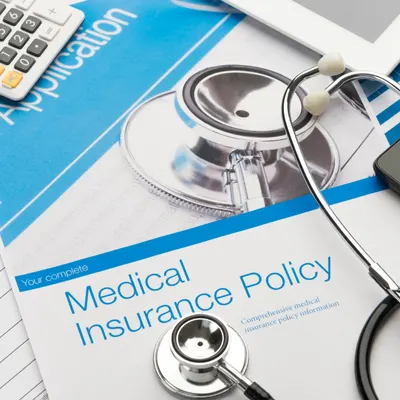
In the past, CGMs were widely thought of as inaccessible tools, mainly because of cost and it required a clinician to prescribe. Many insurance companies do not cover the cost of CGMs unless you have gone through a multitude of steps. Even then, coverage can be denied. Luckily, clinicians are finding great value in CGMs—not just for people with diabetes, but for other patients—and are becoming more likely to prescribe them.
Patients are also seeing the value CGMs provide and are more willing to pay for them out of pocket if not covered by insurance. With more and more sensors on the market and new technology being developed as we speak, the CGM has become more cost-friendly to the people.
So, how does one go about obtaining a CGM? One option is signing up for a program, such as Ciba Health’s Diabetes Reversal Program, which provides the CGM as part of their program. This doesn’t require a prescription or dealing with insurance. Alternatively, one can reach out to their PCP and ask for a prescription for the CGM to be sent to their local pharmacy. The pharmacy will process this CGM through insurance. The pharmacy may be notified by the insurance company that a prior authorization (PA) may be required in order to process this claim. The prescribing physicians’ office can submit this PA on behalf of the individual and the pharmacy will be notified of the decision. Should the insurance company deny coverage, one can always pay out of pocket for the device, and in many cases, coupons and manufacturer discounts can be applied, so it’s more affordable!
Many biotech companies are jumping on the bandwagon with CGMs and inventing their own devices. These companies see the value of these devices as well as the demand. In the future, many of these companies will also start creating a device that will be sold over the counter (OTC), making it even more accessible to the people. The future of CGMs in all facets of healthcare is promising, and I look forward to seeing how our healthcare changes for the better!