From Pregnancy to Menopause: How Remote Monitoring Is Closing the Gap in Women's Healthcare

May is Women's Health Month—a moment to celebrate progress and honestly assess how far we still have to go. Women make up more than half the U.S. population and are often the primary healthcare decision-makers in their households, yet they remain disproportionately underserved by traditional care models. Appointments are hard to get. Time is scarce. Geography creates barriers. And for women navigating some of the most complex and consequential health transitions of their lives, "waiting until your next visit" simply isn't good enough.
Remote patient monitoring (RPM) is changing that. By putting clinical-grade devices in the hands of women at home and routing the data back to care teams in real time, health plans and digital health programs can deliver continuous, proactive support across every stage of a woman's health journey. Not a once-a-year snapshot, but a sustained clinical presence that meets her wherever she is.
Why Remote Patient Monitoring Matters for Women's Health
Women's healthcare needs don't fit neatly into annual checkups or episodic visits. Conditions like hypertension, gestational diabetes, and PCOS require consistent monitoring over time, not just reactive intervention when something goes wrong. Yet the structure of traditional care makes that continuity nearly impossible, especially for women who are managing careers, caregiving responsibilities, and limited access to specialists.
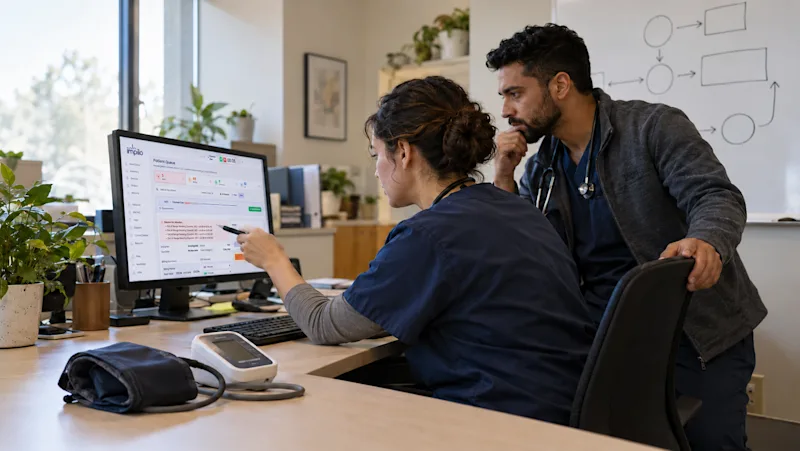
Remote patient monitoring for women's health addresses this by extending the reach of clinical care beyond the clinic walls. Devices like connected blood pressure cuffs, continuous glucose monitors (CGMs), pulse oximeters, and smart scales generate daily data that care teams can monitor, respond to, and use to intervene earlier. The result: better outcomes, fewer preventable hospitalizations, and a more engaged, supported patient.
Remote Monitoring Across the Women's Health Lifecycle
Pregnancy and Postpartum Monitoring
Maternal health is one of the most urgent gaps in American healthcare. The United States has the highest maternal mortality rate among high-income nations, and conditions like preeclampsia, which can develop and escalate rapidly, are among the leading contributors. The critical insight: preeclampsia is highly detectable when blood pressure is monitored consistently.
Remote monitoring programs built around connected blood pressure cuffs allow pregnant members to take daily readings at home, with automated alerts triggered the moment a reading falls outside a safe range. For high-risk pregnancies or members in rural areas hours away from a maternal-fetal medicine specialist, this monitoring capability is a clinical safeguard.
Gestational diabetes affects up to 9% of pregnancies. Continuous glucose monitors and connected glucometers give care teams the data they need to manage blood sugar proactively rather than reactively. Smart scales help track fluid retention and weight changes that can signal complications before they become emergencies.
The postpartum window carries its own risks that are frequently missed. Hypertension doesn't always resolve at delivery. Postpartum depression affects nearly one in eight new mothers but remains chronically underdiagnosed. Extending RPM programs into the weeks following birth keeps care teams connected during a period when women are often the most isolated and the least likely to proactively reach out.
Remote Care for Women Managing Chronic Conditions
For women in their 20s, 30s, and 40s, chronic conditions like PCOS, Type 2 diabetes, and hypertension create compounding risks that benefit directly from consistent remote monitoring. Women with Type 2 diabetes face a higher relative cardiovascular risk than men with the same diagnosis—yet they're less likely to be enrolled in structured monitoring programs.
Connected glucose monitors and remote blood pressure devices deployed as part of a coordinated program give care teams the longitudinal data they need to catch trends early and intervene before complications compound. Wearables that track heart rate, sleep quality, and physical activity fill in the broader metabolic picture that labs and office visits alone can't provide.
For health plans, these programs translate directly into better HEDIS® performance, reduced ER utilization, and lower total cost of care.
Perimenopause and Menopause: A Critical and Underserved Window
Menopause remains one of the most underdiscussed health transitions in medicine. Women can spend a decade or more in perimenopause, experiencing symptoms from sleep disruption and hot flashes to mood changes and cognitive fog—while cardiovascular risk quietly climbs in the background. Estrogen's protective effect on the heart diminishes after menopause, making the years that follow a critical window for cardiovascular intervention.
Remote monitoring programs for midlife and older women, can identify risk early, support lifestyle and medication interventions, and reduce costly downstream cardiac events. by utilizing connected blood pressure devices, wearables, and smart scales with an actively engaged care team. For health plans, this is both a meaningful member benefit and a long-term driver of cost savings.
The Device Infrastructure That Makes It Work
Strong clinical programs require strong operational foundations. Deploying remote monitoring at scale, particularly to historically underserved populations, means getting the right device to the right person, enrolled, connected, and generating data from day one.
That's the problem Impilo is purpose-built to solve. Our platform manages device selection, fulfillment, cellular connectivity, and data routing so health plans and digital health companies can focus on care delivery rather than logistics and wading through multiple platforms. Whether you're launching a maternal health initiative, a menopause support program, or a chronic condition management offering, Impilo provides the device infrastructure to make it real and the flexibility to scale as programs grow.
Women deserve care that follows them through life, not just care they have to go seek out. Remote patient monitoring, backed by the right infrastructure, makes that possible.
Ready to build a women's health virtual care program? Get in touch with the Impilo team.
Frequently Asked Questions: Remote Patient Monitoring for Women's Health
What is remote patient monitoring for women's health?
Remote patient monitoring (RPM) for women's health uses connected medical devices, such as blood pressure cuffs, glucose monitors, and wearables, to collect clinical data from patients at home. That data is transmitted to care teams in real time, enabling continuous oversight between in-person visits. For women, this is especially valuable during pregnancy, postpartum recovery, chronic condition management, and menopause.
How does remote monitoring help detect preeclampsia during pregnancy?
Preeclampsia is characterized by elevated blood pressure and can develop rapidly during pregnancy. Connected blood pressure cuffs used in RPM programs allow pregnant patients to take daily readings at home. When a reading exceeds a clinical threshold, automated alerts notify the care team immediately, enabling intervention days or weeks earlier than a scheduled prenatal visit might allow.
What devices are used in remote patient monitoring programs for women?
Common RPM devices used in women's health programs include: connected blood pressure monitors (especially for pregnancy and cardiovascular health), continuous glucose monitors or glucometers (for gestational diabetes and Type 2 diabetes management), pulse oximeters, smart scales, and wearables that track heart rate, sleep, and activity. The specific device mix depends on the clinical program and the member's health needs.
Can remote patient monitoring support women with chronic conditions like PCOS or hypertension?
Yes. Conditions like PCOS, hypertension, and Type 2 diabetes, which are common in women and carry compounding cardiovascular risks, benefit significantly from continuous remote monitoring. Connected devices provide the longitudinal data that care teams need to identify trends, adjust treatment plans, and intervene before complications escalate.
How does RPM support women during perimenopause and menopause?
During perimenopause and menopause, women face increasing cardiovascular risk as estrogen levels decline. Remote blood pressure monitoring, heart rate tracking via wearables, and smart scale data help care teams identify early warning signs of hypertension, weight gain, and cardiac risk, supporting earlier intervention and more personalized care during this often-overlooked transition.
How do health plans benefit from remote patient monitoring programs for women?
Health plans deploying RPM programs for women's health typically see improved performance on quality measures like HEDIS®, reduced emergency department and hospital utilization, and better member engagement. Early detection of conditions like preeclampsia, uncontrolled hypertension, and gestational diabetes can significantly reduce the cost of high-acuity events, making women's health RPM programs both clinically impactful and financially compelling.
What role does device logistics play in a successful RPM program?
Getting the right device to the right member fully enrolled, connected, and generating data, is one of the most common operational challenges in RPM. Device fulfillment, cellular activation, and data routing all need to work seamlessly from the moment a member is enrolled. Platforms like Impilo handle this end-to-end device infrastructure, reducing the operational burden on health plans and digital health companies and ensuring programs launch and scale effectively.