Imagine starting your shift and being handed a stack of 200 patient charts. No priority order. No flags. No way to know who needs your attention right now and who can wait until tomorrow.
That's the reality for many care teams today. And it's a data problem.
Across the country, clinicians are drowning in information but starved of actionable insight. They know their patients have chronic conditions. They know vitals are being collected. But without a system that surfaces the right signals at the right moment, the most at-risk patients can fall through the cracks because the tools weren't built to help.
This is where remote patient monitoring (RPM) changes everything, when done right.
Why Patient Engagement Is More Than a Buzzword
Patient engagement has become one of healthcare's favorite phrases. But behind the jargon is a genuinely important idea: patients who are active participants in their own care have better outcomes.
Research consistently shows that engaged patients experience fewer hospital readmissions, better medication adherence, and higher satisfaction with their care. For those managing chronic conditions like heart failure, COPD, diabetes, or hypertension, sustained engagement between clinic visits is often the difference between stable health and an avoidable crisis.
But engagement doesn't happen automatically. It has to be built into the care model. For patients managing complex conditions at home, it requires the right technology to bridge the gap between the clinic and daily life.
That technology is remote patient monitoring.
What Remote Patient Monitoring Actually Does (When It Works)
At its core, RPM technology allows clinicians to collect patient health data, like blood pressure, glucose, weight, oxygen saturation, heart rate, and more, continuously or at regular intervals, without requiring an in-person visit.
But the data collection piece is the easy part. The hard part is what happens next with that data. This is where most RPM programs struggle.
Common failure modes include:
Data sits in a dashboard that no one has time to review
Alerts fire constantly, leading to "alarm fatigue" where clinicians start ignoring them
There's no clear system for triaging which patients need immediate attention
Care teams spend more time managing the technology than caring for patients
Patient engagement drops after the first few weeks because the experience feels disconnected
Effective RPM is about making that data meaningful and actionable for the clinicians and patients who depend on it.
The Real Problem: Too Much Data, Not Enough Signal
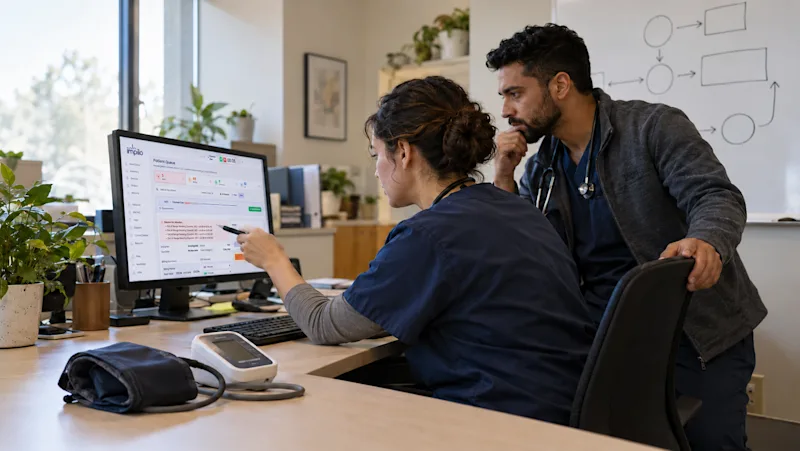
Here's a scenario that plays out in RPM programs every day: A care manager opens their dashboard and sees 150 patients. Twelve of them have triggered some kind of alert. Three of those alerts are about patients they should probably call today. But the dashboard shows all 12 with equal urgency.
The care manager spends 45 minutes working through the list. By the time they reaches the third patient, the one whose blood pressure has been trending dangerously upward for four days, that patient has already been seen in the emergency room.
This isn't a hypothetical. It's one of the most common failure points in RPM programs, and it comes down to one thing: clinical prioritization.
Effective patient prioritization in RPM requires more than threshold-based alerts. It requires context: How long has this value been out of range? Is this patient high-risk to begin with? Have they been non-adherent with their readings? What does their trend look like over the past week versus just today?
When the right data is surfaced in the right way, care teams can do what they were trained to do: make good clinical decisions quickly, and focus their energy on the patients who need it most.
How Impilo Approaches Patient Engagement and Data-Driven Care
Impilo was built around a foundational belief: the best RPM infrastructure doesn't just collect data, it helps care teams understand what to do with it.
As a flexible RPM and connected health platform, Impilo provides the device and data infrastructure that healthcare organizations need to build and scale remote patient monitoring programs, with patient engagement and clinical prioritization built in from the ground up.
Device Flexibility That Drives Patient Adherence
One of the biggest barriers to long-term patient engagement in RPM is device friction. If a patient can't figure out their blood pressure cuff, or their glucometer doesn't sync reliably, they stop using it. When they stop using it, the program fails.
Impilo's device agnostic platform supports a wide range of connected health devices, giving organizations the flexibility to match devices to patient needs, preferences, and existing workflows. Whether a patient needs cellular-enabled devices with zero app setup, or a more sophisticated multi-device kit, Impilo ensures the data flows seamlessly and that patients actually use their devices.
Real-Time Data Pipelines Built for Clinical Action
Impilo's infrastructure is designed to move patient data from device to care team in near real-time, with the ability to integrate directly into existing EHR and care management platforms. This means clinicians aren't toggling between multiple systems or waiting for data to sync. It's where they already work.
For organizations building their own RPM workflows on top of Impilo's API, the platform provides the reliable, scalable data layer needed to power intelligent prioritization logic—the kind that flags the patient whose blood pressure has been trending up for four days, not just the one who had a single high reading this morning.
Scalability Without Sacrificing Personalization
One of the challenges of scaling RPM programs is maintaining the personalized attention that makes them effective. As patient panels grow, care teams can't manually review every reading, but patients still need to feel seen and supported.
Impilo's platform enables organizations to build automation and engagement workflows that keep patients connected. Whether through automated check-ins, adherence nudges, or escalation protocols, this frees care teams to focus their personal attention where it has the most impact.
What "Getting It Right" Actually Looks Like
Let's go back to that care manager with 150 patients. What does their morning look like when the RPM program is working well?
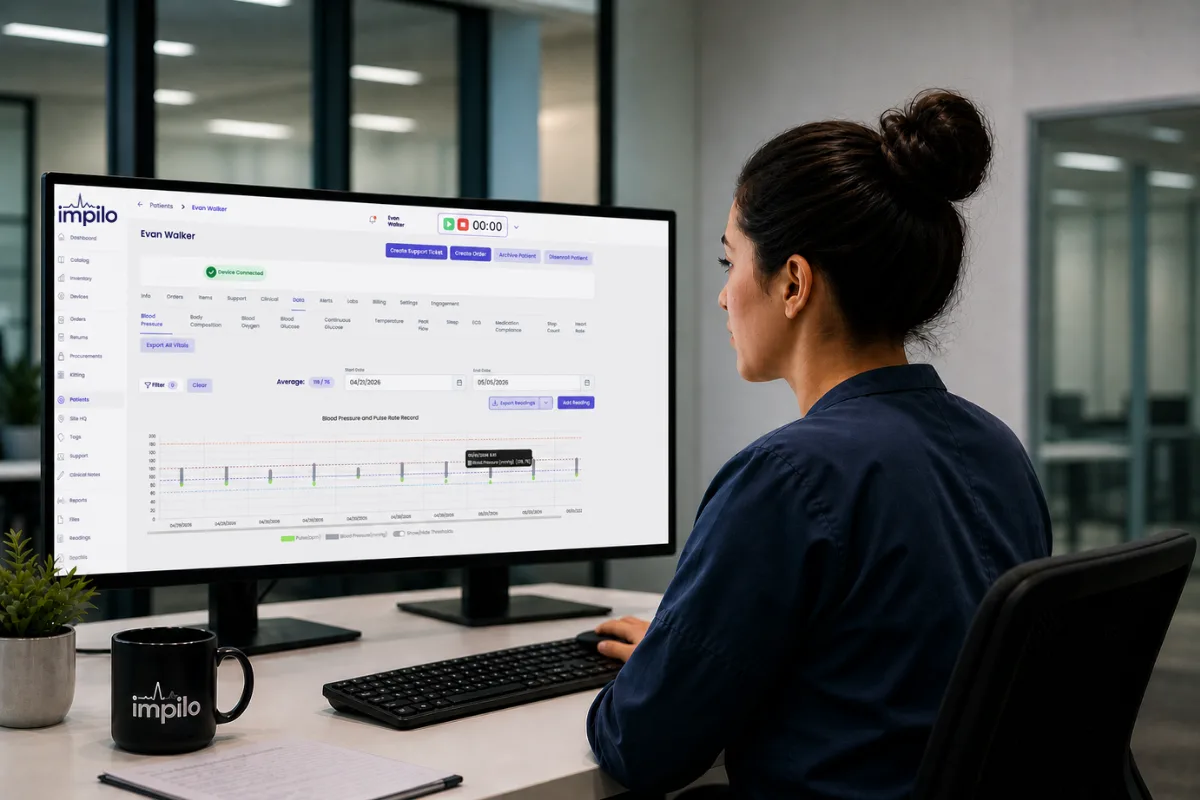
They open their dashboard and sees three patients at the top of a prioritized worklist. The list is ordered by a combination of alert severity, trend duration, patient risk score, and days since last outreach. The care manager knows immediately who needs a call and why. The first patient's blood pressure has been creeping up for five days. The second missed their last three readings. The third triggered an out-of-range glucose reading that their care plan flags as requiring same-day follow-up.
In two hours, the care manager made three meaningful interventions, each backed by data, each preventing a potential escalation. The other 147 patients have readings within range, and their next scheduled check-ins are already queued.
That's not a fantasy. It's what well-implemented RPM programs, built on solid data infrastructure, make possible every day.
Key Takeaways for Healthcare Organizations Evaluating RPM
If you're building or scaling a remote patient monitoring program, here's what the most successful organizations get right:
Patient engagement starts with device simplicity. If patients can't or won't use their devices, no amount of clinical sophistication will save the program. Choose devices that fit your patient population.
Data is only valuable if it drives action. Invest in workflows and tools that translate raw readings into prioritized, contextualized insights for your care team.
Prioritization is a clinical safety issue. Not all alerts are equal. A smart patient prioritization system helps care teams direct their attention to the patients with the highest acuity before a bad outcome occurs.
Scalability requires automation — but not at the expense of personalization. The best RPM programs use automation to handle routine engagement and free up clinician time for the interactions that matter most.
Your data infrastructure determines your ceiling. The quality and flexibility of your underlying RPM platform — how data is collected, normalized, transmitted, and made available — will define what's possible in your clinical workflows.
The Future of RPM Is Proactive, Not Reactive
Remote patient monitoring has the potential to fundamentally shift how chronic disease management works from reactive care that responds to crises, to proactive care that prevents them.
But realizing that potential requires more than devices and data collection. It requires the right data in front of the right clinician at the right time, and an infrastructure layer that makes that possible consistently, at scale.
That's what Impilo is building: the connected health infrastructure that powers the next generation of patient engagement and remote care delivery.
If you're ready to build a smarter RPM program (one where your care team always knows who needs attention most)—let's talk!