Meet Pilo: Connecting the Digital and Physical Work of Remote Care
A patient has not submitted a blood pressure reading in 48 hours. Another needs a replacement device. A third has an unanswered message waiting in a different system.
None of these tasks is especially complicated on its own. The challenge is finding them, understanding the context and coordinating the next step across systems, teams and physical operations.
That work adds up. It pulls care teams into dashboards, spreadsheets, inboxes and manual follow-up when their time should be focused on patients.
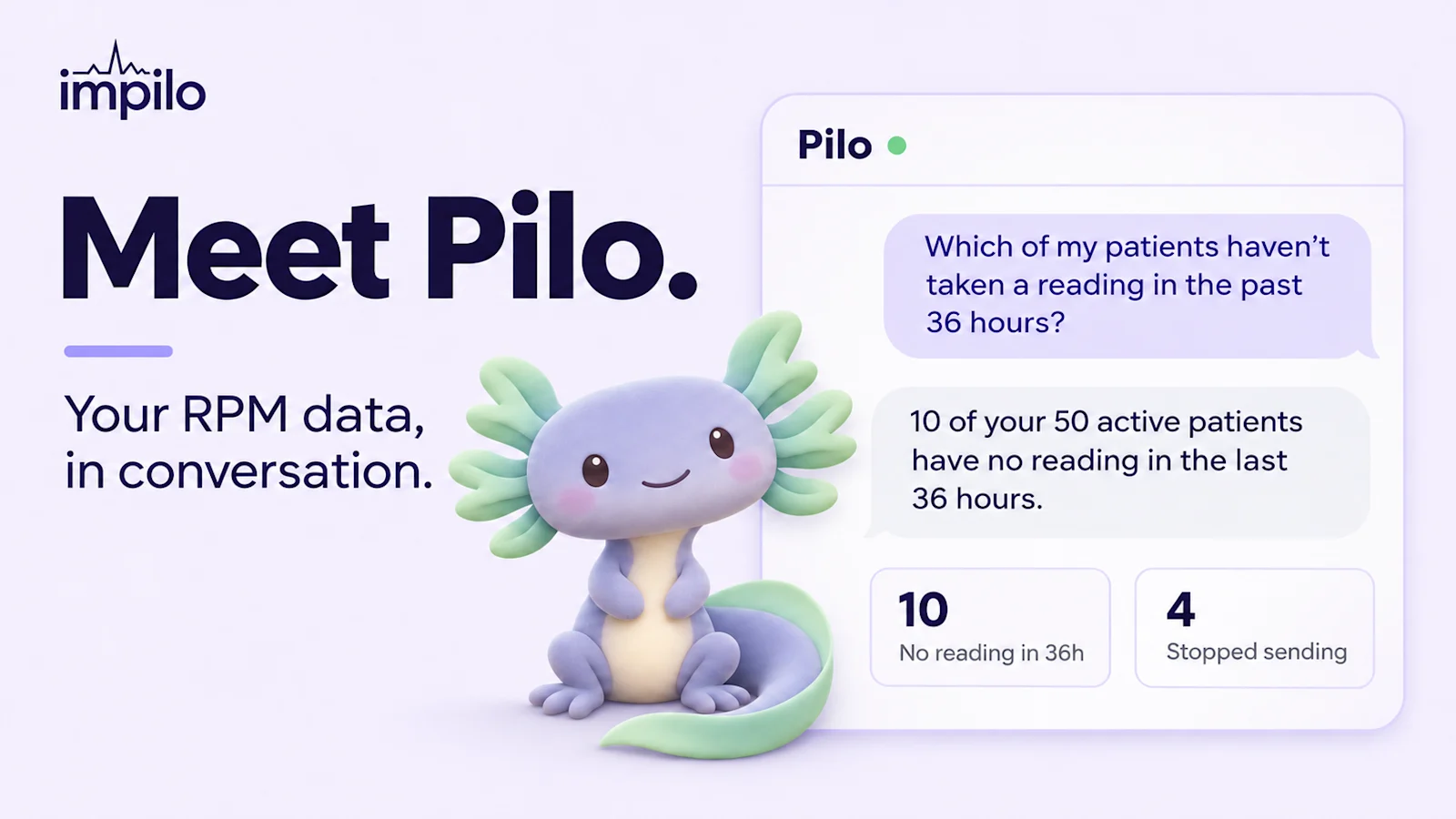
In November 2026, Impilo is introducing Pilo, an AI-powered operational assistant built to help healthcare organizations run that work more effectively. Pilo monitors connected healthcare and operational data, identifies what needs attention and helps coordinate the next action while keeping care teams in control.
The Hardest Part of Remote Care Happens Between Systems
Remote care does not run in a single application. Patient readings may arrive through one platform. Messages live somewhere else. Device orders, replacements and returns follow another process. Documentation and reimbursement create their own operational requirements.
When these systems do not work together, staff become the integration layer. They search for missing information, rebuild patient context and manually move work from one system or person to another.
Pilo is designed to reduce that burden. It uses healthcare and operational data already connected through Impilo and a customer’s existing systems to monitor activity, identify exceptions, assemble relevant context and bring forward the work that requires human judgment.
The goal is straightforward: less time looking for the work and more time acting on what matters.
Turn Questions into a Repeatable Workflow
Care teams do not always need another dashboard. Sometimes they need a direct answer and a reliable process for what happens next.
With Pilo, a user can describe a workflow in natural language or begin with a preconfigured workflow. Pilo turns that request into a transparent sequence of steps that can run on a schedule or in response to an event. Teams can review, edit, copy and adapt those workflows as their operations change.
For example, a user might ask:
“Hey Pilo, which patients have not recorded a blood pressure reading within the past 48 hours?”
Pilo can review incoming readings, identify patients who meet the criteria, prioritize exceptions, assemble relevant patient context and prepare follow-up actions for staff review.
That same approach can support a range of operational needs, from patient engagement and documentation to device-related follow-up and revenue cycle preparation.
Connect Digital Intelligence to Physical Action
Most AI assistants operate within software. Remote care also depends on what happens in the physical world.
A device must reach the right patient. Supplies may need to be replenished. A malfunctioning device may need to be replaced, returned, or refurbished. Those physical steps are part of the care experience and not a separate logistics problem.
Pilo is connected to Impilo’s device-agnostic healthcare supply chain, data infrastructure and patient engagement tools. When a patient needs a device, additional supplies, a replacement or a return, Pilo can help coordinate the next steps through Impilo’s operational infrastructure. When patient data or engagement activity signals a need for follow-up, Pilo can surface the relevant context and prepare the appropriate action.
This is what makes Pilo different: it connects digital intelligence with physical execution.
Pilo does not just help teams understand what needs to happen next. It helps them make it happen.
Keep Care Teams in Command
Automation in healthcare needs visible rules, clear oversight and an evidence trail.
Pilo is built around supervised operation and traceable workflow history. Operations, compliance, and technical teams can review recommendations, refine workflow steps and require human approval before outbound actions are taken. Workflow activity is recorded against the patient to support documentation, quality review, and auditability.
Organizations can begin in Pilo Review Mode, with staff evaluating each recommendation. Lower-risk workflows can move to exception-based review only after the organization establishes the appropriate performance, safety and policy guardrails.
Pilo does not make autonomous clinical decisions. Care teams remain in command.
As Impilo CEO Josh Stein explains:
“Care teams do not need another dashboard to monitor. They need an operating layer that continuously finds and organizes what matters, then brings people in when their judgment is required. Pilo turns connected data into coordinated action—reducing manual work while preserving the oversight and accountability healthcare demands.”
A More Practical Operating Model for Remote Care
As patient populations grow, remote care teams should not have to add more manual work at the same pace. They need infrastructure that helps them prioritize, coordinate and supervise work across the full care journey.
Pilo brings that model closer by connecting information, workflows and physical operations through one operational assistant.
Pilo is currently in early beta with select Impilo customers. Impilo plans to expand access to organizations on the Pilo waitlist in early 2027.
To learn more, request a working session, or join the waitlist, visit www.impilohealth.com.
Frequently Asked Questions
What is Pilo? Pilo is Impilo’s AI-powered operational assistant for remote care. It helps healthcare organizations monitor connected data, identify exceptions, prioritize work and coordinate next steps across digital workflows and physical care operations.
How does Pilo work with existing healthcare systems? Pilo is designed to use data connected through Impilo and an organization’s existing systems, including EHRs, proprietary platforms and revenue cycle tools. It brings relevant information and tasks together so teams spend less time searching across separate systems.
Does Pilo make autonomous clinical decisions? No. Pilo is built around supervised operation, and organizations can require human review and approval before actions are taken. Care teams remain responsible for clinical judgment and can establish the guardrails appropriate for each workflow.