
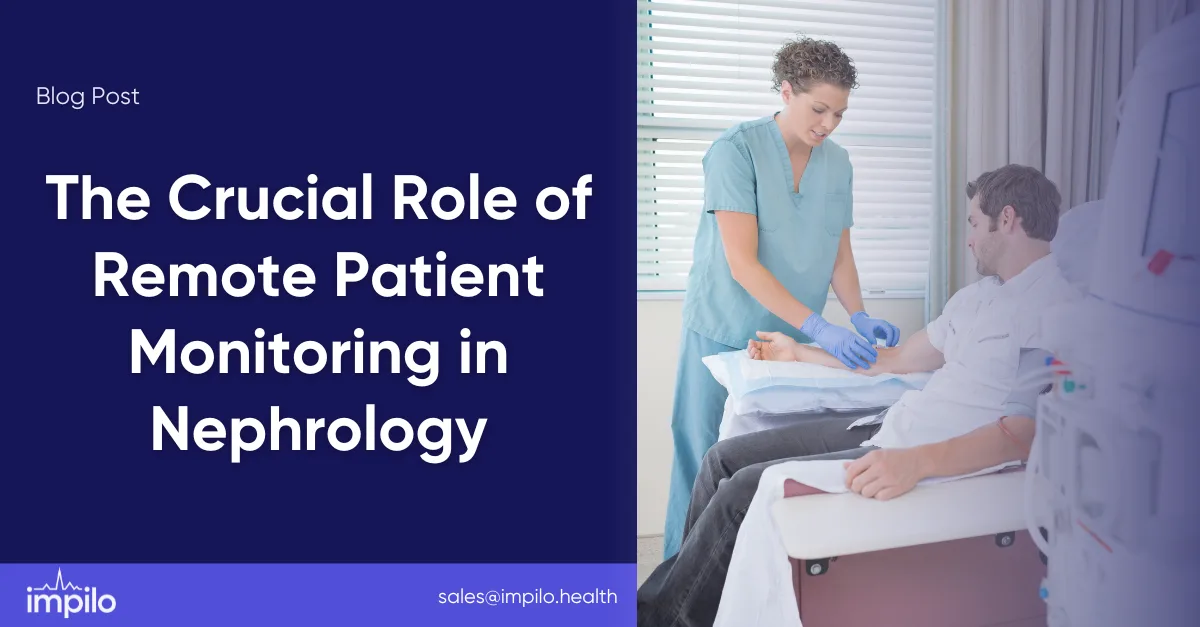
The Crucial Role of Remote Patient Monitoring in Nephrology
According to the National Kidney Foundation, chronic kidney disease (CKD) affects a significant portion of the population, with approximately 35.5 million U.S. adults—more than 1 in 7—estimated to have the condition. Notably, about 1 in 3 adults with severe kidney disease are unaware of their condition. Catching warning signs early and managing those symptoms are critical to prevent the progression of kidney failure, which currently affects about 815,000 Americans.
Enhancing Early Detection and Intervention
Remote Patient Monitoring (RPM) enables nephrologists to track key real-time health metrics such as blood pressure, fluid retention, and glucose levels. This proactive monitoring helps detect early signs of disease progression, allowing for timely interventions that can slow CKD advancement and reduce hospitalizations. Studies have shown that RPM can lead to fewer hospitalization days for patients performing dialysis at home.
Improving Patient Adherence and Engagement
With RPM, patients can take an active role in their care by regularly tracking their vitals and receiving feedback from their providers. When patients are engaged in tracking their own health, it leads to better adherence, lifestyle modifications, and medication management, which are essential in preventing complications such as hypertension and cardiovascular disease. Continuous tracking of crucial items like blood pressure and urine protein levels through RPM allows for early detection of CKD progression, prompting timely interventions.
Reducing Healthcare Costs and Hospitalizations
CKD-related complications often lead to frequent emergency visits and hospitalizations. By identifying potential health risks early, RPM helps reduce unnecessary hospital admissions and lowers overall healthcare costs, benefiting patients and providers. For instance, RPM has been associated with lower hospitalization rates and fewer hospital days in automated peritoneal dialysis patients.
Supporting Dialysis and Transplant Patients
For patients on dialysis or waiting for a kidney transplant, RPM provides critical monitoring of fluid balance, weight fluctuations, and blood pressure. These insights enable healthcare teams to make data-driven adjustments to treatment plans, ensuring optimal patient outcomes and preventing complications such as fluid overload or hypertension. Research indicates that RPM in peritoneal dialysis patients is associated with better technique survival and lower mortality rates.
Seamless Integration with EHRs for Better Care Coordination
RPM solutions that integrate with Electronic Health Records (EHRs) ensure that nephrologists and care teams can access comprehensive patient data. Having a seamless integration with an EHR leads to better coordination among the healthcare team so informed decisions are made. Effective RPM programs can enhance care coordination, leading to improved patient outcomes.
The Future of Nephrology Care with RPM
As technology advances, RPM will continue to play an integral role in nephrology, helping to improve early detection, enhance patient engagement, and streamline care delivery. By leveraging RPM, nephrologists can provide proactive, data-driven care that enhances patient outcomes and reduces the burden of chronic kidney disease. The adoption of RPM in nephrology practices has the potential to transform CKD management and improve patient quality of life.
Interested in learning more about how Impilo can be the infrastructure of your RPM program so you can focus on patient care? Contact us today at sales@impilo.health to learn how we can help.