
What CMS's 2027 Proposed Rule Means for Outsourced RPM and RTM Staffing

On July 14, 2026, CMS released its Calendar Year 2027 Physician Fee Schedule proposed rule. Buried in a document mostly concerned with conversion factors and E/M coding is a section that should get more attention from anyone running a remote monitoring program: CMS wants to change who is allowed to actually do the monitoring.
Three changes are on the table for remote physiologic monitoring (RPM) and remote therapeutic monitoring (RTM). Individually, they're procedural. Together, they signal where CMS thinks oversight has been weakest, and it's not the devices.
What CMS actually proposed
Per the fact sheet, CMS is proposing to:
Limit RTM to established patients.
Practices could no longer bill RTM when monitoring starts with a brand-new patient. RPM isn't included in this restriction. CMS's language singles out RTM.
Require a separately billable initiating visit for RPM and RTM.
A clinician has to see the patient and document a distinct visit at the start of monitoring. Enrollment alone wouldn't be enough.
Restrict payment to clinical staff employed directly by the billing practice.
CMS would stop paying for RPM or RTM performed by contractors. Only work done by the practice's own employees would qualify.
CMS is also asking for comment on bundling the RPM and RTM codes into new G-codes, and says the current coding structure hasn't fully addressed concerns raised in recent OIG reviews of remote monitoring billing. Read together and the direction is that CMS wants a tighter, more direct line between the billing practice and the person actually watching the data.
This is a proposal, not a final rule
It's worth saying plainly: this is a proposed rule with a public comment period ahead of it. CMS doesn't always finalize what it proposes. RPM and RTM policy in particular has shifted between proposed and final rules in past cycles. Based on CMS's typical rulemaking calendar, a final rule would likely arrive this fall, with any adopted changes effective January 1, 2027. Nothing here is locked in yet, and practices shouldn't treat it as such. But the comment CMS is inviting, and the OIG reports it's citing, both point in one direction, and that's worth planning around regardless of the exact provisions that survive.
The provision that matters most: who's actually on the monitor
The contractor restriction is the one worth sitting with. Some RPM and RTM programs are built around outsourced clinical staffing, where a vendor supplies not just the devices and software, but the nurses or techs who review readings and log time under the billing practice's NPI. If CMS finalizes this provision as proposed, that model stops being billable. The monitoring has to be done by someone the practice actually employs.
That's a real operational problem for practices that adopted RPM specifically because a vendor offered to hand them a turnkey program, staff included. It means either building internal monitoring capacity from scratch, mid-program, or unwinding the vendor relationship altogether and neither of which happens quickly.
What "established patient" and "initiating visit" mean for everyone
The other two provisions aren't about vendor choice. They'd apply no matter who's running your program. If you're using RTM to onboard new patients before they've had a visit with your practice, that workflow needs to change. And if any part of your enrollment process treats the initiating visit as optional or bundled into general onboarding, it would need to become a distinct, separately documented visit. These are compliance and workflow questions, not staffing questions, and every RPM/RTM program will need to look at them regardless of vendor.
Building a program that isn't exposed to this
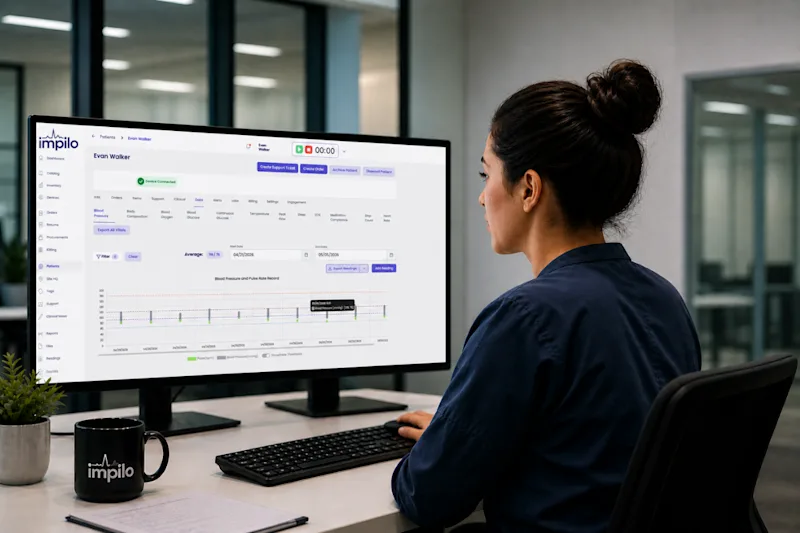
The practices best positioned here are the ones where monitoring was never outsourced in the first place and where the practice's own clinical staff has always done the work, and the vendor's job is to make that work fast and manageable rather than to replace it. That's the model Impilo is built around: the platform automates enrollment, monitoring workflows, alert triage, and billing readiness so your existing team can run a program at scale without adding headcount or handing the clinical work to a third party. If this provision is finalized as proposed, programs built that way don't have to change anything about who's doing the monitoring because it was always the practice's own staff.
If you're currently relying on a vendor's staff to run monitoring, now's a reasonable time to think about what happens to your program if that becomes non-billable. If you're building a program for the first time, it's worth designing around your own team from day one rather than betting on a staffing model that may not survive rulemaking.
FAQ
Is this rule final? No. This is a proposed rule from CMS's CY2027 Physician Fee Schedule, released July 14, 2026. It's subject to a public comment period before CMS issues a final rule, and CMS can and does modify or drop proposed provisions between the proposed and final stages.
Does this affect RPM, RTM, or both? The contractor-staffing restriction and the initiating-visit requirement are proposed for both RPM and RTM. The established-patient restriction is proposed for RTM only — CMS's proposed language doesn't extend it to RPM.
What should a practice using outsourced monitoring staff do right now? Nothing needs to change today, since this is still a proposal. But it's worth understanding how much of your program's billing depends on contracted staff versus employed staff, so you're not caught flat-footed if the provision is finalized.