
API-first EHRs vs. Traditional EHRs: How to Simplify EHR Integration

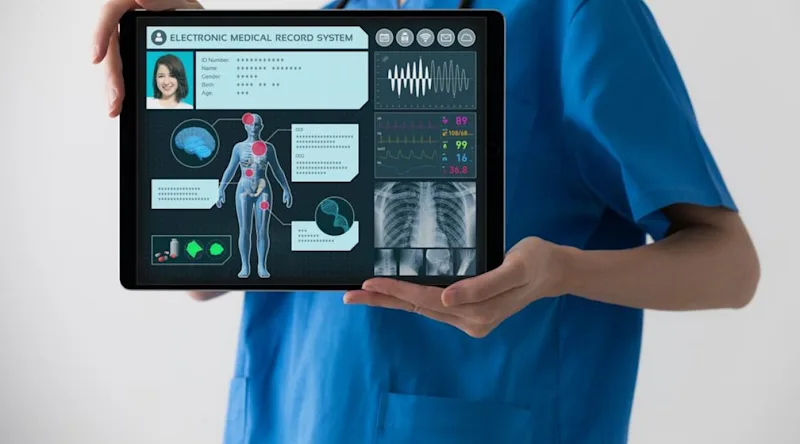
In recent years Remote Patient Monitoring (RPM) has emerged as a vital component for delivering quality care outside traditional healthcare settings. Virtual care programs leverage various medical devices to collect patient data, such as vital signs, and transmit it to healthcare providers for analysis and intervention. Despite the rise in popularity of RPM, traditional healthcare processes and tools have yet to evolve to accommodate the integrations needed to facilitate an RPM program. A significant challenge that many organizations face in the successful implementation of RPM programs is the seamless integration of these devices with Electronic Health Records (EHRs).
The Problem:
Traditionally, RPM programs utilize devices that face significant difficulty in connecting to many traditional EHRs. This challenge often leaves healthcare providers no choice but to work across multiple platforms, creating additional barriers to accessing and reviewing patient data. This disconnected approach not only complicates the workflow for providers but also increases the risk of errors, provider burnout and gaps in patient care.
Challenges of RPM Device Integration with Traditional EHRs:
Compatibility Issues: RPM devices often use different communication protocols and data formats, making it challenging to integrate them within EHR systems.
Data Security Concerns: Transmitting patient data from connected devices to EHRs raises concerns about data security and privacy, requiring extensive encryption and authentication measures.
Workflow Disruption: Inefficient integration can disrupt healthcare providers' workflow, requiring them to switch between multiple platforms, leading to reduced productivity and increased chances of errors.
Lack of Standardization: The lack of standardized integration protocols for RPM devices and EHRs/EMRs complicates the integration process, requiring customized solutions for each integration.
The Solution:
To address these challenges and allow data to flow between medical devices to an EHR integration, healthcare providers can turn to solutions that integrate with popular EHR’s, utilize API documentation, or decide to utilize an API-first EHR. Unlike traditional EHRs that often require complex and time-consuming integration processes, API-first EHRs provide an efficient way to connect different systems and applications. By offering a set of APIs, these EHRs allow for data flow between systems, ensuring data accuracy, integration, and real-time updates. API-first EHRs enable digital health companies to innovate more rapidly, adapt to changing requirements, and deliver enhanced patient care experiences. Another solution to integrate data into a provider's current systems can be partnering with an organization like Impilo. Impilo's API infrastructure is designed to facilitate seamless integration, providing digital health companies with the tools and resources needed to connect their systems with ease.
By leveraging a partner that can integrate into EHR platforms, healthcare providers can benefit from:
Efficient Data Exchange: API integration enables RPM devices to directly communicate with EHRs. This eliminates the need for manual data entry, reducing the risk of errors and saving valuable time for healthcare providers.
Enhanced Patient Care: With seamless integration, healthcare providers can access real-time patient data directly within their EHR. By having all of a patient's data in one location, providers have the opportunity to focus their attention on the patient, rather than navigate through multiple platforms.
Improved Data Accuracy: Direct integration ensures that patient data from RPM devices is accurately captured and stored in EHRs and EMRs, reducing the risk of errors and discrepancies.
Cost Savings: By reducing manual data entry, integration can result in cost savings for healthcare providers, allowing them to allocate resources more efficiently.
Remote Patient Monitoring (RPM) is challenging traditional healthcare delivery outside of care facilities. While virtual care offers many benefits, integrating RPM devices with Electronic Health Records (EHRs) can pose challenges. Traditional EHRs often struggle with the complexity of RPM device integrations, leading to fragmented workflows and potential gaps in patient care.
However, solutions such as API-first EHRs and partnerships with organizations like Impilo offer a way forward. These solutions streamline data exchange, enhance patient care, improve data accuracy, and can result in cost savings. By utilizing these solutions, healthcare providers can navigate the complexities of RPM integration, deliver more effective care, and continue to adapt to the changing landscape of virtual care delivery.
For more information on Impilo's API and how we can help integrate your devices into your EHR, please contact sales@impilo.health