Why Virtual Care Programs Need Platform Infrastructure, Not Point Solutions

The Remote Infrastructure Problem Nobody Talks About
Digital health operators spend a lot of time evaluating virtual care devices. They spend considerably less time evaluating whether the infrastructure underneath those devices can actually support a program at scale. That's where programs break.
Devices are commodities. The clinical evidence for remote monitoring is settled. CMS has created clear reimbursement pathways through CPT codes 99453, 99454, 99445, 99457, 99470, and 99458. The demand signal from chronically ill patient populations, particularly cardiac, pulmonary, and renal, is undeniable.
What's not settled is the operational layer connecting enrollment to device fulfillment to monitoring to EHR integration to billing. And for most virtual care programs, that layer is a patchwork of point solutions, manual workflows, and spreadsheets that no single person fully owns.
The result: programs that look viable at 50 patients and collapse at 200.
What Point Solutions Can't Fix
The typical virtual care stack at a clinic or health system looks something like this: a device vendor for hardware, a monitoring vendor for alerts, an EHR for clinical documentation, and a billing team managing CMS codes manually at the end of each month. Each piece functions in isolation. None of them talk to each other automatically.
This creates five compounding failure points.
Enrollment Leakage
Without automated enrollment triggers, patients are identified and then never actually enrolled, due to the chaos of a busy practice. Programs that rely on manual intake lose a meaningful share of their eligible population before monitoring ever starts.
Fulfillment Delays
When device ordering is handled through a separate vendor workflow, 1–2 weeks of lag time before a patient receives their device is common. That delay pushes back the first qualifying reading and the first billing opportunity.
Reactive Monitoring
Dashboard-based monitoring requires someone to check. When that doesn't happen consistently (and in understaffed practices, it often doesn't), high-risk readings go unreviewed. The proactive care value proposition evaporates.
Data Silos
Monitoring data that lives in a vendor portal is effectively invisible to the physician at the point of care. If it isn't surfaced in the EHR, it won't change clinical decisions. That's not an integration problem.
Billing Underrecovery
CMS RPM reimbursement requires documentation of time spent and readings received across the care episode. Programs that reconstruct this data at month-end systematically miss codes they earned. Industry data suggests significant revenue leakage is common in manually-managed RPM billing workflows.
No amount of better devices fixes these problems. They require a different architectural approach.
What Platform Infrastructure Changes
The operators running virtual care programs at scale have one thing in common: they're not running five separate systems. They're running a platform.
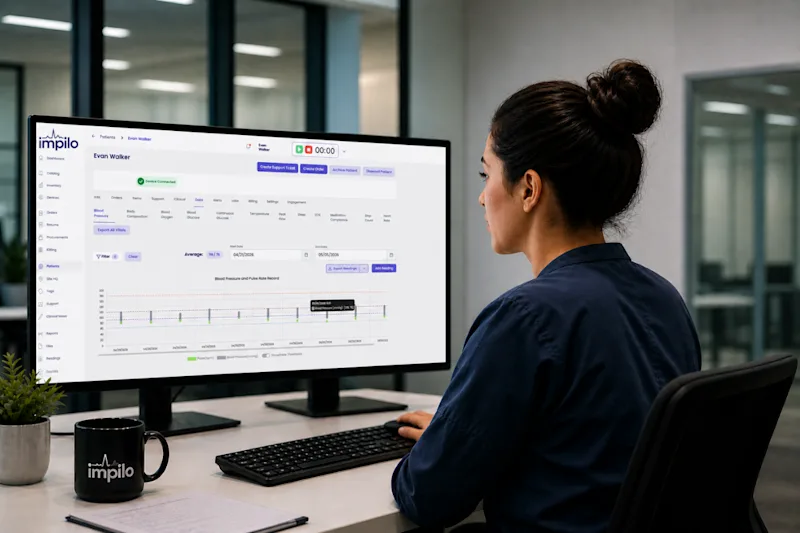
Platform-driven virtual care means every operational layer connects. Enrollment triggers fulfillment. Fulfillment triggers monitoring initiation. Out-of-range readings trigger escalation alerts. Device data flows into the EHR automatically. Billing signals are captured continuously throughout the care episode.
When those layers connect, several things happen simultaneously: time-to-first-bill compresses, care team bandwidth scales, high-risk patients surface before they deteriorate, and the program generates the clinical and financial outcomes that justify its existence.
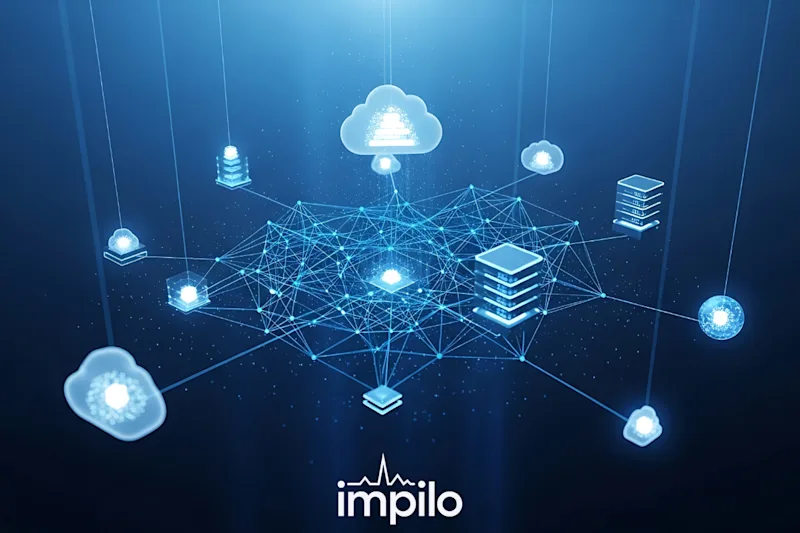
This is what Impilo is built to be. Not a device vendor. Not a monitoring point solution. A platform infrastructure layer for RPM and CCM programs — one system that manages the full program lifecycle from enrollment to billing readiness, with EHR integrations across Epic, Athena, eClinicalWorks, and others.
The result is a program that scales without adding headcount and generates data that actually influences care.
The Question Every Digital Health Operator Should Ask
Before building or buying into an RPM program, the right infrastructure question isn't "which devices should we use?" It's: "Does this platform connect every operational layer from enrollment to billing — or am I going to be stitching together point solutions six months from now?"
Point solutions aren't wrong. They're just incomplete. And in virtual care, incomplete infrastructure is what turns a viable program into a stalled one.
Platform infrastructure is what makes virtual care scalable. That's not a product pitch — it's an architectural reality that the operators who've tried to scale manual workflows will tell you directly.
FAQ
Q1: What's the difference between an RPM device vendor and an RPM platform? A device vendor provides the hardware and, often, a monitoring portal to view readings. A platform connects the full operational stack, including enrollment, fulfillment, monitoring, EHR integration, and billing into a single automated workflow. Device vendors solve a piece of the problem. Platforms solve the infrastructure problem that determines whether a program can scale at all.
Q2: How does Impilo differ from other RPM software solutions? Impilo is designed specifically as an infrastructure layer, not a monitoring dashboard or a device reseller. It automates the workflow connections between enrollment, device fulfillment, monitoring alerts, EHR data surfacing, and billing signal tracking. The practical outcome is that programs running on Impilo can manage significantly larger patient panels without adding proportional clinical or administrative headcount.
Q3: What does CMS require to bill RPM codes, and how does platform infrastructure help? CMS requires specific thresholds for RPM reimbursement:
CPT 99453 (initial setup)
99454 (device supply with at least 16 days of readings in a 30-day period)
99445 (device supply for 2-15 days of readings in a 30-day period)
99457 (20 minutes of monitoring and care management)
99470 (10-19 minutes per calendar month)
99458 (each additional 20 minutes)
Meeting these thresholds requires accurate documentation across the care episode — not just at billing time. Platform infrastructure that tracks these signals continuously from enrollment forward eliminates the reconciliation gap and ensures programs capture the reimbursement they've earned.